Showing posts with label Punctuation. Show all posts

Sunday, September 18, 2016

What is a Sentence, Dammit?

Here are some lines from graduate student essays:

1.  When he laughed at my question, at first I was surprised, in all four years of my university career, a professor had never been anything but helpful when I asked for help.

2.  You sound angry, what's up do you have some deadline to meet and your computer is not working

3.  So you're saying you can do this movement better than me, is that it?

Image result for an independent clause
Read the sentences aloud.  Find the places where one thought ends and another begins.


ANSWERS:

1.  When he laughed at my question, at first I was surprised.  In all four years of my university career, a professor had never been anything but helpful when I asked for help.
2.  You sound angry.  What's up?  Do you have some deadline to meet and your computer is not working?
3.  So you're saying you can do this movement better than me?  Is that it?

Sunday, October 25, 2015

Ode to the Colon

The full colon is a much abused couple of dots.  It is often omitted or misplaced.  I just ran across this sentence in my student's essay:

"I was picking through a rack of clothing, flipping through mindlessly, when I saw it.  The shirt."

I let that slide, but in my punctuating heart I would have preferred

"I was picking through a rack of clothing, flipping through mindlessly, when I saw it:  the shirt."

Colon Rule #1

Colons introduce lists, even a list of one.
Colons follow nouns, not verbs.  I tend to follow colons with two spaces, semicolons with one space.  If you follow periods with two spaces, do the same with colons.

Which of these sentences are wrong?

  1. Things that make my life meaningful are:  love, food, and music.
  2. My life is made meaningful by these things:  love, food, and music.
  3. Our topic might include: the impact of violent video games on computer science students, the best violent video games, and the gaming subculture.
  4. Our group members are:  Adam, Jane, Shaun, and Matt.
  5. The thieves stole the following items a printer, a DVD player, and a laptop.
  6. My boss insisted on three rules of behaviour be polite, control your temper, and ask questions when you don’t understand.
  7. Some of my qualities are:  charm, intelligence, and ambition.
  8. The officer seized the following items, 12 bullets, 13 knives, 20 semi-automatic weapons, and one virtual light sabre.
Colon Rule #2

Colons also introduce direct quotations; however, in most informal writing, a comma is preferred.

Insert colons, quotation marks, and hyphens in the sentences below:
  1. The CBC website today says A court in China has sentenced an online gamer to death for the real world murder of a fellow player after a confrontation over a virtual weapon.
  2. The article also says that the victim was stabbed with a real weapon for selling a virtual sabre.  It is unclear whether the sabre was sold for real or virtual money.
  3. The website at http://open.utoronto.ca/ has the following This cross divisional, tri campus project was launched in November 2004 with a two and a half year grant from the Provost's Academic Initiatives Fund (AIF).
Colon Rule #3

Colons are used to indicate time.  The robbery took place at 11:30 a.m.  Take note that a.m. and p.m. are written in lower case with periods.

When using military time (the 2400 clock), the use of the colon seems to depend on the author.  The Toronto airport and Via Rail use the colon.  Police, hospitals, and emergency services often do not use the colon; however, scientists and engineers tend to use it.  Here are some correct sentences:

  1. The GTAA website says my flight will arrive at 16:20.
  2. The ambulance arrived at 0022.  
  3. I was dispatched at 2320 to 1285 Main St. East.

Ode to the Colon
by Elizabeth Zetlin


O double pinhead

dagger of colonization

never direct

always explaining

leading us to expect
you’ve got the answer.

You dribble along
a tangle of intestine
ending up at:
yes: the rectum,
that final excretion
of all your verbiage
all your promises all your excuses
about being too busy,
not having enough time,
you’ll get to it tomorrow.

You lead us on and on
with your examples,
series of comments, lists
of things you have to do.
Why don’t you just relax,
tip sideways
like the eyes of crows:
come to an end.


 from The Thing with Feathers, BuschekBooks, 2004, p. 68.

Answers
Quiz 1:  Only #2 is correct.
Quiz 2:  
  1. The CBC website today says, "A court in China has sentenced an online gamer to death for the real-world murder of a fellow player after a confrontation over a virtual weapon."
  2. The article also says that the victim was stabbed with a real weapon for selling a virtual sabre.  It is unclear whether the sabre was sold for real or virtual money.
  3. The website at http://open.utoronto.ca/ has the following: "This cross-divisional, tri-campus project was launched in November, 2004, with a two-and-a-half year grant from the Provost's Academic Initiatives Fund (AIF).

Wednesday, October 14, 2015

The Semicolon is Everywhere

Image result for semicolon tattooSuddenly, the semicolon is a very popular tattoo.  It is a sign that "the sentence is not over yet" for people struggling with mood disorders and mental illness.

"A semicolon is used when an author could've chosen to end their sentence, but chose not to. The author is you and the sentence is your life." 

Consequently, it seems in questionable taste to now discuss proper use of the semicolon; yet, I just noticed several places in my student's essay where a semicolon would make it easier to read.

In the sentence above, you see a semicolon before "yet."  I would normally put a comma before "yet" since "yet" is a conjunction joining two complete sentences as we discussed here.  I chose a semicolon because there are already commas in the sentence, and the punctuation before a conjunction joining two sentences carries a particular heft. 

QUIZ:  Here are the sentences from WW's essay.  How should they be punctuated?
  • 1.  Unfortunately, our chosen topic did prove to be difficult to research and our presentation was scattered, vague, and far too broad.
  • 2.  I don’t want to become more persuasive because I think that all my ideas are great, but in this instance and others like it, I failed to convince my group not to make a poor decision.
My student did manage to put a semicolon in his essay - in the wrong place.  He wrote
  • 3.  I find that I can often miss what the other person is saying; not on an emotional or subtext level but I often find it difficult to simply pay attention

The semicolon is a confusing punctuation mark.  It is most commonly used to join two short complete sentences when it seems like a good idea.  It indicates more than a comma, but less than a period.  In the examples above, a semicolon helps a reader navigate a sentence that already has several commas.  There are other uses, including now as a symbol of hope and support for people with mental illnesses

Answers
1.  Put the semicolon after "research."
2.  Put the semicolon after "great."
3.  Change the semicolon to a comma and put the semicolon before "but."  It's not a great sentence, but we are just here now to edit semicolons.

Saturday, October 10, 2015

Comma Coma #8: Conjunctivitis

Conjunctions (and, but, as, or nor, yet) join things.

Sometimes conjunctions join two complete sentences.  Each sentence has a subject and a verb.  Here are two of my student's sentences:
  • "I'd like to be better at communicating clearly with my family."
  • "I am the only person in my family who has ever been to graduate school."
Where should Batman add commas?
If you wish to join these two sentences, put a comma before the conjunction:  "I'd like to be better at communicating clearly with my family, as I am the only person in my family who has ever been to graduate school."

Another student wrote
  • I don't think my nervousness is something I can easily control.
  • I just wish I could find a way to stop thinking about it and be confident in what I am saying.
Join the sentences with "but" and you have this:  "I don't think my nervousness is something I can easily control, but I wish I could find a way to stop thinking about it and be confident in what I am saying."  Add a comma before the conjunction when joining two complete sentences.

Notice there is no comma between "and" and "be confident."  If the author had added "I wish I could" after "and" then there would be two complete sentences joined by a conjunction and the comma after "and" would be required:  ". . . but I wish I could find a way to stop thinking about it, and I wish I could be confident in what I am saying." 

Where should Batman have added commas?

Answer
Add a comma before each "and."

Saturday, September 26, 2015

Comma Coma #7: When You Have an Introductory Word, Phrase, or Clause, Insert a Comma.

A sentence has a primary subject and a verb:

Image result for commasStephen Harper (subject) is (verb) our former prime minister.


There might be other parts of the sentence with subject-like words and verb-like words, but you need to be able to identify your primary subject and verb.

We often put introductory material in front of the primary subject and verb.  It might be 

  • a single word:

Finally, Stephen Harper is our former prime minister.

  • a phrase:

In my dreams, Stephen Harper is our former prime minister.

  • or a subordinate clause (nouns and verbs that do not form a stand-alone sentence):

Whenever I think about Canada's future, Stephen Harper is our former prime minister.

Separate the primary subject and verb from the introductory material with a comma, especially if the intro is long.

QUIZ:  Insert the missing commas:


  1. If I were showing my work at a gallery in another city it would appear to my dealer that he was losing potential income rather than capitalizing on an opportunity.
  2. When she would eventually talk to me I would be very surprised and ultimately upset.
  3. Having not seen any warnings signs I would feel defensive and respond as if I was under attack


Answers 1.  after "city"; 2.  after "me"; 3.  after "signs"

Monday, July 6, 2015

Comma Coma #6: Roughing It in the Bush

In a previous blog, I wrote about the problem of using too many commas.

Here's a sentence on the back cover of an edition of Roughing It in the Bush (Virago, 1986):
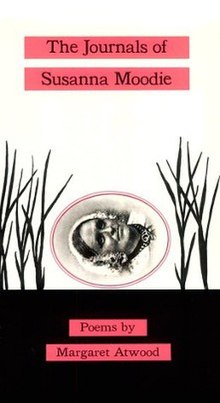
Her absorbing book, reissued in its full version and with an introduction by Margaret Atwood, whose first volume of poetry, The Journals of Susanna Moodie, is testimony to the enduring spirit of a remarkable woman, has been out of print in Britain since 1852.
 What a wonderful example of horrible punctuation.  The author has created a 44-word sentence chopped up by five commas. Margaret Atwood would be horrified.

I thought perhaps the back cover sentence was an homage to Susanna Moodie's writing style, but Moodie's sentences are as crisp and clear as an autumn afternoon.  Let me qualify that somewhat:  an autumn afternoon in 1832.  But still - 

I suggest dividing the offending sentence into at least two sentences:

1.  Her [Moodie's] absorbing book has been out of print in Britain since 1852.
2.  The new version includes an introduction by Margaret Atwood whose first volume of poetry, The Journals of Susanna Moodie, is testimony to the enduring spirit of a remarkable woman.

Count the words in your sentences or count your commas.  Either action will help you if you want to write better (dammit).

Wednesday, January 21, 2015

Comma Coma #5: A Subject Stands by Her Verb and Will Not Let a Comma Between Them

Subjects need their verbs to create a sentence.  A good subject and verb will not allow a comma between them.
Once upon a time, students sat in classrooms parsing sentences. They were told to put one line under the entire subject and two lines under the verb.  When you are clear on which words are the subject and which words are the verb, you might be more circumspect about tossing in your commas.


Identify the subjects and verbs in these sentences and delete or add punctuation.  Here are a bunch of sentences from my recently marked essays.


  1. Seeing my kids grow and blossom like spring flowers, fills me with strength.
  2. Where I want wrong, was when I took his comments to heart and did not see the real emotion behind them.
  3. One of the biggest problems, was the fact that we used to earn bonuses for drafting patents.
  4. One of the things that I observed about you, is that you were interested in knowing me.
  5. One thing I will never forget, is the great advice you gave me.


Answer:
Delete all the commas (if you want to write better, dammit).

Tuesday, January 20, 2015

Comma Coma #4: She said, "He said." Writing Conversations

It seems that my appetite for comma comments is large.

 In my last blog, I recommended that you be selective in your choice of insertions.  Some commas are considered more necessary than others, such as the comma that introduces a quotation.  

My student wrote:
One day my frustration came out in a question to my manager "What would you do if I resigned?"
I'd put a comma after manager.  I'd put a comma before every quotation in order to indicate a new tone of voice and to separate the quotation from the rest of the sentence.

I would also put commas and periods inside quotation marks, like this:

"The town was just too small for that to happen," Joe told me, "and we have to placate the rowdy bullies."

Punctuating quoted material requires thought.  For example, let's take a long quotation and put our "he said" in the middle:
"My teacher is obsessed with punctuation," he said, "and is force-feeding us a solid diet of commas."
  1. Why is the second comma in that sentence?  Why is "and" not capitalized?
  2. How would you change the quotation and punctuation if you decided to put a period after "said"?
EDIT:  My students often want to put a period after a quotation that ends in a question mark or exclamation mark.  Here is a sentence I just read:
I should have said, "Are you saying the dress code is unreasonable?  Is that it?".
There is no need for the final period.  The question mark adequately ends the sentence.

One more thing:  


Start a new paragraph with every new speaker.

From my student's essay:

"How can I be a better listener?" I asked my wife.  She replied, "Show you're listening by looking at me, nod, smile, and take out your earbuds."  "I can hear you with my earbuds in," I replied defensively.

Rewrite:
     "How can I be a better listener?" I asked my wife.  
     She replied, "Show you're listening by looking at me.  Nod, smile, and take out your earbuds."
     "I can hear you with my earbuds in," I replied defensively.

Answers
1.  "[H]e said" should be considered an interrupting phrase and is, thus, surrounded with commas.  "And" is not capitalized because it does not start a new sentence.
2.  "My teacher is obsessed with punctuation," he said.  "He is force-feeding us a solid diet of commas."

Thursday, December 25, 2014

Comma Coma #3: Commas and the Three Bears

The first core problem with commas is this:
In grade 3, you were told to put a comma where you pause.
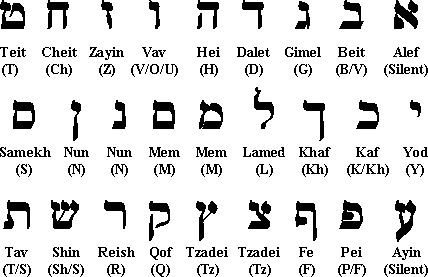
The vowels are dots and dashes placed under these
consonents. You won't see them in public signs though.

This implies that the pause came first.
1.  You hear a pause.
2.  You insert a comma.

In a world where everyone speaks, reads, and understands the same language in the same way, that might be possible.

In written Hebrew, there are no vowels because it is assumed that people who speak the language can fill in the vowels themselves.

So we should know where commas go just from listening to spoken language, right?
Well, it would be pretty to think so.

Then there's the problem with the so-called comma rules that appear in all the style guides.  (I previously suggested two of these rules.)  This brings us to the second core problem with commas.
 Rules should be thought of as suggestions.

If you follow all the rules, you might end up with a sentence like this one from my graduate student's essay.  He was writing about a time when he was misperceived:
One night, while walking to the bar, Kate told me, "You know, you are not at all like we thought you were."
Four commas in 22 words.  Aarggh.

Papa Bear said, "This sentence has too many commas."
Momma Bear said, "Let's take them all out."
Baby Bear said, "How can we make this sentence just right?"

In a case like that, ask yourself:
  • Which comma is the most essential?
  • Can I change the words so that it is readable with fewer commas?
What would you do?  I mean, what would you do when you want to write better (dammit).


Suggestion:  While walking to the bar one night, Kate told me, "You are not at all like we thought you were."

Saturday, December 13, 2014

Comma Coma #2: Are You Appositive?


In my first blog, I speculate on reasons why graduate students seem unfamiliar with so many rules of style.  Another reason is that some of my students have been away from school for many years and working in places where correct writing was neither necessary nor valued.

The first thing to forget is the squiggle sprinkled throughout text known as the comma.

Should they remember the comma, they most remember the words of their Grade 3 teacher:  "Insert a comma where you pause."

This rule is not much help to stutterers or speakers unfamiliar with the normal cadence of a language.

Here's another comma omission:  Sometimes one noun or a noun phrase will rub up next to another noun to give the first noun more dimensions.  This is called the noun in apposition.  "Appositive" means to put next to - near, but we don't want it too close, so the noun in apposition is separated from the first noun by a comma.

My student's essay began with these sentences:

My friend, Max and I do a lot of hanging out together.

I live with my spouse Gretchen and our relationship is more complicated than my friendship with Max.   

How many commas are missing?

Know this:  If you find them, you will write better (dammit).

Answers:
1.  My friend, Max, and I do a lot of hanging out.  [The word "together" seems redundant.]
2.  I live with my spouse, Gretchen, and our relationship is more complicated than my friendship with Max.

Comma Coma #1: Interrupting the Flow of the, Oh My Gosh, Sentence


Of course there should be a comma between "Better" and "Dammit" in the name of this blog, but as long as we know the rule, we can break it.

Write Better Dammit, this blog, is an homage to #writebetterdammit the tag on the website Hubski.  The tag was first used by Caio and is one of my favourites on that website.  

What is Hubski?  It has been called "an online pub with creative and thoughtful people belly-up at the bar of reason and sanity."  I found it while searching for the Higgs-Boson.


There should be a comma between "Write Better" and "Dammit" in the name of this blog because "Dammit" is what is known as an interjection.  It is inserted into spoken and written language to convey emotion and is separated from the rest of the sentence by commas.

There are several comma rules and that is one of them:  Put commas around words that interrupt the flow of a sentence in order to write better, dammit.

EDIT:  Comma inserted August 31, 2015.