Sunday, July 26, 2015

Parts of Speech

Dear Students

Before you read any further, make sure you understand the vocabulary of this blog.  Please review the parts of speech.  Here is why:

Let's imagine that you want to write "I just received my Ontario Driver's Licence." and then suddenly feel some doubt.  Is it "license" or "licence."  You could open your wallet and look at your licence, but instead you open your beloved Canadian Oxford Paperback Dictionary and look it up.  One is the noun spelling and one is the verb spelling.  Clearly, you will have to know the difference between a noun and a verb.


In my comments on your work, I might say
  • remove extra, unnecessary adjectives
  • find and fix the wrong verb
  • clarify the pronoun reference
  • add "ly" to your adverbs
  • put a comma before your conjunctions when there are more than three items in a list
  • insert a definite article  
If you do not understand the parts of speech, you won't understand my editing vocabulary and you will have difficulty with the suggested corrections.  If you are a little rusty on parts of speech, look on the universal prosthetic memory (Google) and find a website with a parts-of-speech review test.  Not only will you and I be on the same page, but you'll quickly learn to write better (dammit).

Monday, July 6, 2015

Comma Coma #6: Roughing It in the Bush

In a previous blog, I wrote about the problem of using too many commas.

Here's a sentence on the back cover of an edition of Roughing It in the Bush (Virago, 1986):
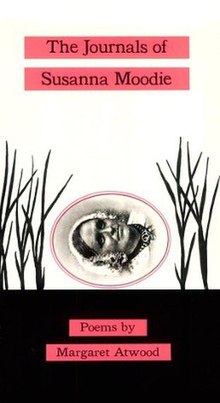
Her absorbing book, reissued in its full version and with an introduction by Margaret Atwood, whose first volume of poetry, The Journals of Susanna Moodie, is testimony to the enduring spirit of a remarkable woman, has been out of print in Britain since 1852.
 What a wonderful example of horrible punctuation.  The author has created a 44-word sentence chopped up by five commas. Margaret Atwood would be horrified.

I thought perhaps the back cover sentence was an homage to Susanna Moodie's writing style, but Moodie's sentences are as crisp and clear as an autumn afternoon.  Let me qualify that somewhat:  an autumn afternoon in 1832.  But still - 

I suggest dividing the offending sentence into at least two sentences:

1.  Her [Moodie's] absorbing book has been out of print in Britain since 1852.
2.  The new version includes an introduction by Margaret Atwood whose first volume of poetry, The Journals of Susanna Moodie, is testimony to the enduring spirit of a remarkable woman.

Count the words in your sentences or count your commas.  Either action will help you if you want to write better (dammit).

Tuesday, June 23, 2015

What is Professional Writing? (aka Graduate-Level Writing)


If you are in graduate school, then you should be functioning at a graduate level. An article from the Royal Roads University website attempts to define graduate-level reading, thinking, and writing for their program.

Since my writing topics tend to be self-reflective, rather than scholarly, the article goes beyond my immediate purposes. However, there is one thing I know for sure:  If you dictate an assignment into a mobile phone, convert it to text, and send it to me unedited (as one of my students once did), then it is probably not graduate-level writing.

Here are some style ideas for graduate-level writing in my classes:
  1. You edit and proofread before submitting a work.
  2. You are familiar with all punctuation marks and know how to use them without overusing them.
  3. You understand the semi-colon, but use it sparingly.
  4. You limit the words in your sentences to around 25, but will vary sentence length for readability.
  5. You understand what a paragraph is.  You end a paragraph when your thoughts take a new direction.  You will have two or more paragraphs per page.
  6. You use pronouns correctly.  (English pronouns like "in," "on," and "of" can be quite difficult for language learners.  Keep a list of the pronoun expressions that you use.)
  7. You look up words that you cannot spell.  For my classes, you use the Canadian Oxford Dictionary.  If I indicate a spelling error, you do not change the word to one you can spell.  You look up the word and add it to your “Words I Can’t Spell” list.
  8. You think about your reader's level and area of expertise.
  9. You know how to introduce and punctuate quotations.
  10. You get rid of extra unnecessary redundant words, such as two of the words in this sentence.
Content is reflective and self-reflective.  If content is inspiring, creative, original, and funny, then a lot of style errors will be forgiven.  You will still have to correct them, but only so your content will be more inspiring. 

You understand that the more you perfect the style, the more you perfect the content.

Thursday, February 5, 2015

CAPITAL CONFUSION #2


I just read this sentence in my graduate student's essay:

"I was selected to work on a project for the open source software Moodle, the best Learning Management Software according to most of the reviews."

It might be the best LMS, but when you write it out, it is called learning management software.  

It is confusing to writers that so many upper-case abbreviations become lower case when written out.  The upper-case abbreviations are called "initialisms," an unpalatable word that I would never say out loud.

If UI is always capitalized, why is user interface lower case?

If HCI is always capitalized, why is human-computer interaction lower case?


If CEO is always capitalized, why is chief executive officer lower case?  

Most initialisms, like CD and ATM, are pronounced letter by letter.  Perhaps the capital letters make that pronunciation more likely:  

"cee-ee-oh" rather than "ceeyo"
"eh-tee-em" rather than "atem" 

Occasionally, the acronym is both capitalized and pronounced as a single word.  One example is WYSIWYG.  However, should you write that acronym out you would write it in lower case:  what you see is what you get.

Bottom line:  Use lower case when writing out a common acronym, unless words are normally capitalized.

Bottom-Bottom line:  Chief executive officer, when written out, is lower case.  All jobs are lower case unless they appear in a signature file at the bottom of a letter, like this:

Stephen Harper
Former Canadian Prime Minister

In a sentence one would write, "Stephen Harper is the former Canadian prime minister."

There are many more opportunities for capital confusion.  Stay tuned, if you want to write better (dammit).

QUIZ 1
Which is right?
  1. CD          compact disc or Compact Disc
  2. GDP        gross domestic product or Gross Domestic Product 
  3. BIOS      basic input/output system or Basic Input/Output System
  4. USSR      union of soviet socialist republics or Union of Soviet Socialist Republics

QUIZ 2
There are more errors in the student's sentence above.  Rewrite the sentence correctly.

QUIZ 3
Fix capitalization in this sentence:  While working as a Graphic Designer, I was asked by our Creative Director to give some feedback to Joe, the company's Brand Manager.


Answers

Quiz 1
1-2-3, lower case.
4 - upper case. 

Quiz 2
I was selected to work on a project for the open-source software, Moodle, the best learning management software according to most of the reviews.

Quiz 3
Delete all capitals on job titles.

Tuesday, February 3, 2015

Me or You? He or They? AntiNouns or ProNouns?

Here are lines from one of my current students:
A software engineer got very aggressive when I approached to question them on their progress.  When the issues were settled, they told me that they felt I was attacking them as a person which lead to their defensiveness.
 For reasons that I do not understand, identifying people by gender has fallen out of favour.  In this case, the software engineer was male and for easy readability, I suggested changing all the plural pronouns to singular male pronouns.  Please!! 

him, his, he, he him, his

Even transgender people usually prefer to be labelled by their desired gender.

There's also a spelling error in the above student lines.  Can you find it?
************
One assignment that I gave my students was to write a letter of appreciation to someone who had helped build the student's self-esteem.  One student wrote to a teacher who consistently left her feeling degraded and inadequate:
After getting through my horrible year as your student, I realized that I am capable of handling difficult situations and there’s no reason to be insecure when you’re trying to learn something new. Now when I find myself facing a challenge, I think of how I got through your class and it gives me the confidence to succeed. I also understand that there will be people in your life that may not be the nicest, but you need to find a way to deal with it because that is how things are sometimes.
 I wasn't exactly sure whether my student was mocking the assignment or was genuinely grateful to the teacher for her cruelty.  I suggested she send the letter, after she fix the pronouns.  The blue words are correct.  The ones in yellow should be in first person:  I'm, my, I.

Pay attention to pronoun consistency, especially if you want to write better (dammit).

Note:  There is considerable discussion about eliminating singular genderized pronouns and replacing those pronouns with the plural or with new pronouns like "ter," "het," or "ze."

I suggest that in face-to-face speech anything is possible, since the listener can say, "What do you mean?"  Writing is best when there is no ambiguity, when the reader can read smoothly from one sentence to the next.  If you choose to move away from genderized pronouns, a note of explanation would help the reader.


Answer
"lead" should be "led"

Friday, January 23, 2015

The LONG and SHORT of It


Long sentences will make me seek intoxicating substances, if long paragraphs don't do it first. Of course there are many wonderful long sentences written by successful writers.  These famous sentences enthral us and leave us holding our breath while we wait, suffocatingly wait, for a period.

imagesBut, dear students, you do not want me to suffocate.  You want me to dance joyfully through your writing.

You do not want me to get to the end of a sentence and say, "Huh?  What was that about?" and have to wander back several pages to find the beginning of the sentence.

Here's a couple of long sentences that I lifted out of student essays.  My student wrote about seeing her boyfriend with another woman and the conversation that followed:

"He answered (sounding very sincere) that she was his last girlfriend and that she came to him because she was feeling very bad because they were not together anymore and that she begged him to go for lunch at least."

This sentence is only 40 words, but here's the problem:  too many clauses.
A clause is a subject-verb pairing.  How many clauses in the above sentence?
  1. He answered (sounding very sincere)
  2. that she was his last girlfriend and
  3. that she came to him because
  4. she was feeling very bad because
  5. they were not together anymore and that
  6. she begged him to go for lunch at least.
So count your words and count your clauses.  Two is okay.  Stop at three.
Here's a 49-word sentence.  My student was writing about his difficulty listening to his mother:

"It might be a cultural thing that parents from my country of origin usually behave more like dictators to their kids, and I seriously think that my relationship with mother would be way better if I could listen less defensively and if she could be less like a dictator."

 What would make this more readable?

Here's some steps to more readable sentences:
  1. Count your words.  If you want to have over 25 words in a sentence, you better have a very good reason.
  2. Vary sentence length.  Lots of long sentences will tire your readers.
  3. Read your work over aloud.  If you start to stumble, maybe your sentences are too long.
Have compassion for your readers if you want to write better (dammit).


Answer:
It might be a cultural thing that parents from my country of origin usually behave like dictators.  My relationship with my mother would be better if I could listen less defensively and if she could be less like a dictator.

Wednesday, January 21, 2015

Comma Coma #5: A Subject Stands by Her Verb and Will Not Let a Comma Between Them

Subjects need their verbs to create a sentence.  A good subject and verb will not allow a comma between them.
Once upon a time, students sat in classrooms parsing sentences. They were told to put one line under the entire subject and two lines under the verb.  When you are clear on which words are the subject and which words are the verb, you might be more circumspect about tossing in your commas.


Identify the subjects and verbs in these sentences and delete or add punctuation.  Here are a bunch of sentences from my recently marked essays.


  1. Seeing my kids grow and blossom like spring flowers, fills me with strength.
  2. Where I want wrong, was when I took his comments to heart and did not see the real emotion behind them.
  3. One of the biggest problems, was the fact that we used to earn bonuses for drafting patents.
  4. One of the things that I observed about you, is that you were interested in knowing me.
  5. One thing I will never forget, is the great advice you gave me.


Answer:
Delete all the commas (if you want to write better, dammit).

Tuesday, January 20, 2015

Comma Coma #4: She said, "He said." Writing Conversations

It seems that my appetite for comma comments is large.

 In my last blog, I recommended that you be selective in your choice of insertions.  Some commas are considered more necessary than others, such as the comma that introduces a quotation.  

My student wrote:
One day my frustration came out in a question to my manager "What would you do if I resigned?"
I'd put a comma after manager.  I'd put a comma before every quotation in order to indicate a new tone of voice and to separate the quotation from the rest of the sentence.

I would also put commas and periods inside quotation marks, like this:

"The town was just too small for that to happen," Joe told me, "and we have to placate the rowdy bullies."

Punctuating quoted material requires thought.  For example, let's take a long quotation and put our "he said" in the middle:
"My teacher is obsessed with punctuation," he said, "and is force-feeding us a solid diet of commas."
  1. Why is the second comma in that sentence?  Why is "and" not capitalized?
  2. How would you change the quotation and punctuation if you decided to put a period after "said"?
EDIT:  My students often want to put a period after a quotation that ends in a question mark or exclamation mark.  Here is a sentence I just read:
I should have said, "Are you saying the dress code is unreasonable?  Is that it?".
There is no need for the final period.  The question mark adequately ends the sentence.

One more thing:  


Start a new paragraph with every new speaker.

From my student's essay:

"How can I be a better listener?" I asked my wife.  She replied, "Show you're listening by looking at me, nod, smile, and take out your earbuds."  "I can hear you with my earbuds in," I replied defensively.

Rewrite:
     "How can I be a better listener?" I asked my wife.  
     She replied, "Show you're listening by looking at me.  Nod, smile, and take out your earbuds."
     "I can hear you with my earbuds in," I replied defensively.

Answers
1.  "[H]e said" should be considered an interrupting phrase and is, thus, surrounded with commas.  "And" is not capitalized because it does not start a new sentence.
2.  "My teacher is obsessed with punctuation," he said.  "He is force-feeding us a solid diet of commas."

Thursday, December 25, 2014

Comma Coma #3: Commas and the Three Bears

The first core problem with commas is this:
In grade 3, you were told to put a comma where you pause.
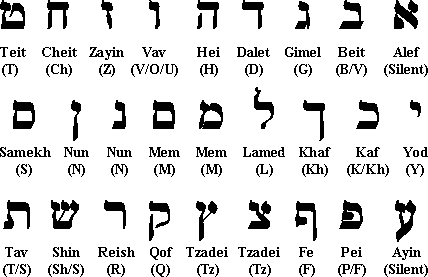
The vowels are dots and dashes placed under these
consonents. You won't see them in public signs though.

This implies that the pause came first.
1.  You hear a pause.
2.  You insert a comma.

In a world where everyone speaks, reads, and understands the same language in the same way, that might be possible.

In written Hebrew, there are no vowels because it is assumed that people who speak the language can fill in the vowels themselves.

So we should know where commas go just from listening to spoken language, right?
Well, it would be pretty to think so.

Then there's the problem with the so-called comma rules that appear in all the style guides.  (I previously suggested two of these rules.)  This brings us to the second core problem with commas.
 Rules should be thought of as suggestions.

If you follow all the rules, you might end up with a sentence like this one from my graduate student's essay.  He was writing about a time when he was misperceived:
One night, while walking to the bar, Kate told me, "You know, you are not at all like we thought you were."
Four commas in 22 words.  Aarggh.

Papa Bear said, "This sentence has too many commas."
Momma Bear said, "Let's take them all out."
Baby Bear said, "How can we make this sentence just right?"

In a case like that, ask yourself:
  • Which comma is the most essential?
  • Can I change the words so that it is readable with fewer commas?
What would you do?  I mean, what would you do when you want to write better (dammit).


Suggestion:  While walking to the bar one night, Kate told me, "You are not at all like we thought you were."

Thursday, December 18, 2014

Pronoun Perplexity: Objective vs Subjective

My graduate student was sharing the cost of a wedding gift with several friends.  He wrote these two sentences about choosing a gift card:
This situation occurred to my friends and I . .
 The store had a variety of items that him and his
fiance could purchase . . .
I could overlook one pronoun offense, but the second one a few lines later meant that he was away the day that they taught objective pronouns in grade school.  

Being in Canada, I also considered that either his friend was in a gay marriage (fianc
é) or he didn't know how to spell fiancée.  But back to the pronouns:

Use "me" when the pronoun is the object of a verb.
"Give me the vodka."
Use "me" when the pronoun is the object of a preposition.
"He gave the vodka to me."
It doesn't matter if he gave the vodka to you and a half a dozen of your friends.  You still use the objective case (me).

Circle the correct pronoun:

  1. Give (me, I) and my fiancée the present.
  2. This machete was given to my friends and (me, I).
  3. My friends and (me, I) gave a casket full of machetes to the bride and groom.
  4. The store had several wedding rings that (him, he) and his boyfriend could admire.
  5. Proofread specifically for objective pronouns before you send your letter of intent to the Graduate Studies Department and (me, I), providing you want to write better, dammit.

Answers:  me, me, I, he, me

Monday, December 15, 2014

Write When You're Angry. Edit When You're Calm.


This baby must not edit her essay until she calms down.
If you are feeling strong emotions, write away.  Anger, regret, and sorrow can propel powerful, interesting stories.

I can always tell when my students feel strongly about a topic because those passages are full of errors.

In the assignments that I am marking now, my students interviewed two people about their listening skills.  They asked important people in their lives, "How do I listen to you when you give me information, when we are in an argument, and when you are telling me your feelings or problems?"

In one essay, my student interviewed his buddy and his girlfriend. In paragraph one, he wrote that his buddy said he was an awesome listener.  This is a beautifully written, error-free paragraph full of specific events of empathic listening.

In paragraph two, he wrote about his interview with his girlfriend. She reminded him of the time when he forgot an item while shopping or didn't listen to directions and got lost driving.  Then  she recalled an argument they had. The writing is suddenly full of missing words, spelling errors, and typos.

When he is reading over paragraph two, he becomes more emotional.  This shuts out the editing part of the brain.  I end up reading an essay that seems to be written by two different people.

Don't press send.  Let the essay sit for a day.  Maybe the rational, judging brain can read over the essay tomorrow.  Read the emotional passages slowly aloud and you might be able to find the typos.  When you are aware that your inner editor can go AWOL, you should be able to write better (dammit).

Sunday, December 14, 2014

Paragraph Lengths

Writing is about CONTENT.  Readers are looking for your message and your thoughts.  Readers take in information in chunks.  Interested readers will try to understand the content chunk by chunk.  Let's look at a piece of writing as a meal:


a five-course Indian meal or a five-course Japanese meal or any meal really.  

The courses of the meal can be of varying sizes and ingredients, but you do not want to totally stuff yourself on any of the courses or you won't have room for dessert.

It's the same with writing.

Let's consider our ingredients:

1.  A phoneme is a unit of sound that distinguishes one word from another.  Consider the phoneme as a molecule of an ingredient of food in your five-course meal.

Phonemes differ from language to language and can be a source of errors.
A student sent me this email:  "My plane was delayed.  There was a tycoon."

He chose the wrong phoneme and mixed up the "k" sound in "tycoon" with the "f" sound of "typhoon."  If you choose the wrong phoneme, you lose the meaning of your word and ultimately of your sentence.

2.  A word is a unit of meaning composed of one or more phonemes.  Consider the word to be like an ingredient in one of the courses in your meal.  

3.  A sentence is a collection of words put together to create a message that includes a subject and a verb.  The subject is usually a noun and the noun can "be" or can "do" something in your sentence.  Just like you need the right ingredients to make a soup and not a soufflé, you need specific parts of speech to make your sentences say what you want.  You need a noun and a verb.  To add flavour, you might throw in an adverb or adjective.  Articles, conjunctions, and prepositions are the secret ingredients that hold your dish together.

To sustain the metaphor, the ingredients (words) are put into sentences (dishes). 
These dishes will form a course of your meal.  For example, stir-fried vegetables, rice, and a chicken ball might be your main course.  Broth, won tons, and green onions together would be the soup course.

4.  Related sentences are grouped together to form paragraphs.  When the story takes a turn, the writer will usually start a new paragraph.  When you finish one course - soup, salad, or appetizer - you move smoothly into your next one.  Your paragraphs are just long enough to give you the flavours of that dish and lead you to the next.

The meal analogy can work for short pieces of writing.  In longer pieces of writing, you must create a section or a chapter composed of several paragraphs.  Give it a sub-heading to guide the readers along.

This meditation occurred because I was reading an essay that has four paragraphs consisting of 408, 186, 120, and 359 words.  My reading was interrupted by the long paragraphs and instead of finishing my marking, I wrote this blog.

I wish the long paragraphs were broken into more bite-size pieces.  Paragraphs should not fill a page if you want to write better (dammit).


Saturday, December 13, 2014

"Are You a Good Which or a Bad Which?"


Remember Glinda's first words to Dorothy when she landed in Oz?  She said, "Are you a good witch or a bad witch?"

Think of that line whenever you use the word "which" in your writing.  There is only one good which.  The good which has the power to refer back to a "a single, clear, unmistakable noun" as the author of a Towson University writing website says.

So let's look at the sentences in my student's essay that sent me to Oz:

"If I am being completely out there, she will quickly jump in to correct me, which sometimes doesn’t result in the best example of listening."
In this example, the writer wants "which" to mean "the friend jumping in to correct me."  This is a behaviour, a memory, an observation, but not a single clear noun.

In the second example in the same essay, the student sensed something was wrong with the sentence structure and thought, perhaps, that he could fix it by starting a new sentence:

"If my friend never listened to what I have to say, I can almost certainly predict that I would not have an interest in listening to what he has to say. Which would then make me a bad listener, even though I have the capability to be a great listener." 
Here  "which" refers to  "not hav[ing] interest in listening to what he has to say."  This is a thought, a concept, an outcome but not a single clear noun.

Both of these are very bad whiches, enough to make the whole house that is our paragraph fall from the sky (unless we write better, dammit).


Answers:
1) Start a new sentence.  Say, "Correcting me does not indicate good listening."
2) Don't start with "which."  Say, "I have the potential to be a great listener, but it has to be a two-way street."

Comma Coma #2: Are You Appositive?


In my first blog, I speculate on reasons why graduate students seem unfamiliar with so many rules of style.  Another reason is that some of my students have been away from school for many years and working in places where correct writing was neither necessary nor valued.

The first thing to forget is the squiggle sprinkled throughout text known as the comma.

Should they remember the comma, they most remember the words of their Grade 3 teacher:  "Insert a comma where you pause."

This rule is not much help to stutterers or speakers unfamiliar with the normal cadence of a language.

Here's another comma omission:  Sometimes one noun or a noun phrase will rub up next to another noun to give the first noun more dimensions.  This is called the noun in apposition.  "Appositive" means to put next to - near, but we don't want it too close, so the noun in apposition is separated from the first noun by a comma.

My student's essay began with these sentences:

My friend, Max and I do a lot of hanging out together.

I live with my spouse Gretchen and our relationship is more complicated than my friendship with Max.   

How many commas are missing?

Know this:  If you find them, you will write better (dammit).

Answers:
1.  My friend, Max, and I do a lot of hanging out.  [The word "together" seems redundant.]
2.  I live with my spouse, Gretchen, and our relationship is more complicated than my friendship with Max.